Victorian Crack Stitching and Lintel Repair
Learn about our previous projects, filter by property type, defect and our solution for each
Learn about our previous projects, filter by property type, defect and our solution for each
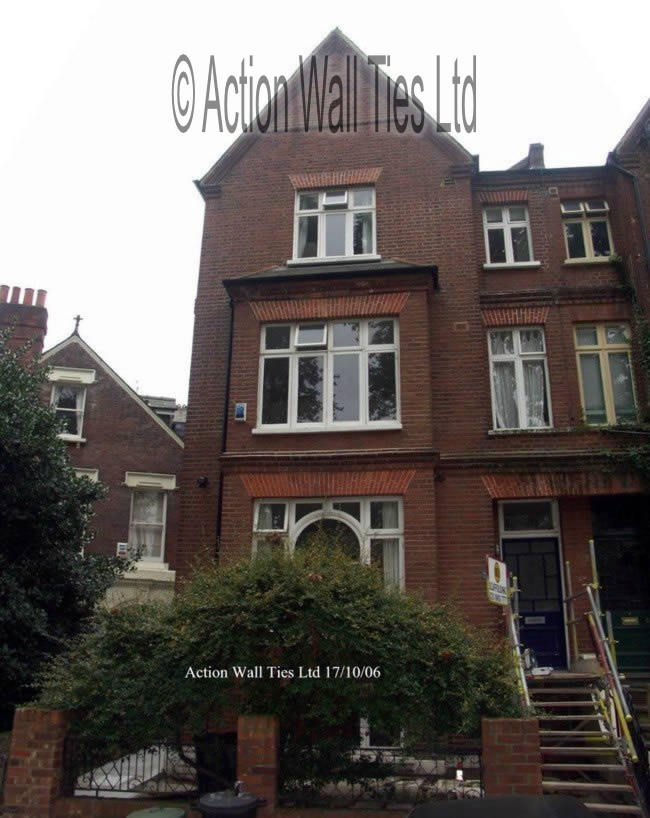
The subject building was a substantial Victorian traditionally built semi-detached domestic house in London, NW3.
Click on the gallery images below to see the full extent of the damage caused by the structural issues. Evidence of previous, unsuccessful attempts to fix the structural issues by traditional building techniques can also be seen.


Signs of distortion and distress were noted, with localised cracked and dropped brick arches to the first and second floor levels of the square bay.
Significant cracking was noted to the external brickwork running from and to the ground, first and second floor window openings. The brick arch was missing from the first floor window and distortion, cracking and dropping were noted to the ground and second floor arches. The first and second floor window openings had temporary supports.
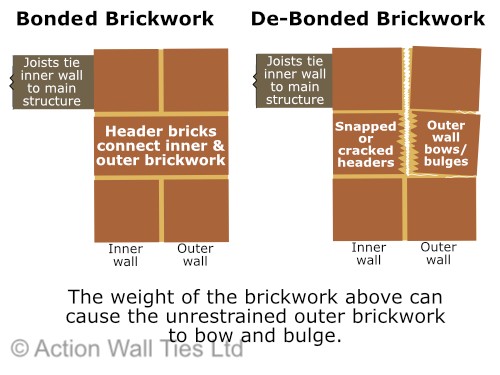
The movement noted was attributed to subsidence. Downward movement had allowed the brick arch to spread and drop and the brickwork to crack. The downward movement had been addressed by a recently completed underpinning scheme. Some de-bonding of the brickwork was also noted.
1. Bed joint reinforcement:
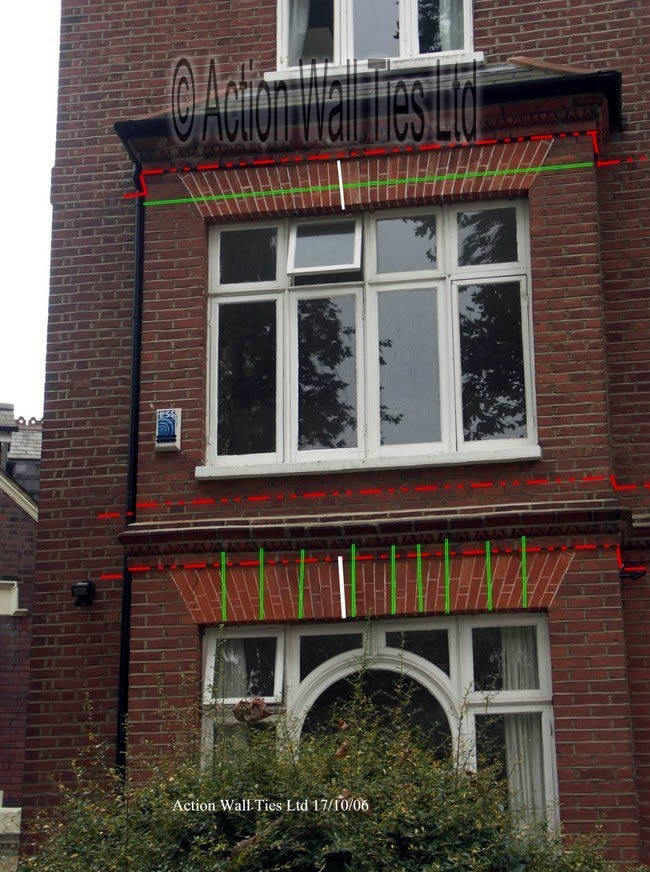
We introduced two rows of twin cord reinforcement, forming a deep masonry beam – as indicated with red double dotted lines on our proposal images.
2. Lintel repair:
To the underside of the fenestration openings head we drilled for, and injected, grouted 8mm helical stainless steel pins through the brick arch, passing into the line of the deep masonry beam installed within the existing masonry – as indicated with green parallel lines on our proposal images.
3. Bay window repair:
To form a beam and reconnect the bay window elevational brickwork, we diamond-drilled a 20mm hole through each elevation, chased into the main elevation and injected grouted 8mm helical bars – as indicated with green horizontal parallel lines on our proposal images.
4. Crack stitching:
To stitch localised cracks we introduced single 8mm stainless steel corded joint reinforcement – as indicated with red single dotted lines on our proposal images.
5. Wall ties to de-bonding brickwork:
To brickwork within the beamed area and arches, where brickwork was believed to be de-bonding, we drilled for and resin bonded 6mm stainless steel remedial ties and re-pointed disturbed areas with a sand and cement mixture.

Signs of distortion and distress, with localised cracking, were noted to the external brickwork to the front entrance archway bridge, along with cracked voussoirs and the dropping of the brick arch and outward movement.
6. Resin bonded ties:
To stabilise the brickwork archway bridge, we introduced truss ties. To form the truss we drilled a 14mm hole at 45 degrees to the required depth, opened the entrance hole to 18mm, resin bonded 10mm stainless steel threaded rods, drilled a horizontal 14mm hole to the required depth, inserted the 10mm stainless steel threaded rods, fixed nuts and washers, resin bonded to the inner wall, tightened nuts to both sides and resin bonded to the outer brickwork.

7. Making good and pointing:
We raked out the existing mortar and repaired with new coloured sand and cement mortar to approximately 20mm in depth. AWT operatives are highly skilled in traditional building methods and always attempt to match replacement bricks, pointing styles and mortar colour to be sympathetic with the existing building.
The photos below show the property 14 years after the work was completed. The high quality structural repairs carried out by AWT are designed to last. Unlike traditional building repairs, our techniques get to the root cause of structural defects.


Action Wall Ties (AWT) are specialists in masonry reinforcement and repair, providing professional solutions to a wide variety of structural problems in Victorian properties in London, Kent and the whole of SE England. Contact us on 01227 721 255, or email us.
Our specialist structural repair contractors will be happy to help provide a comprehensive and permanent repair to your structural problems.