13-storey building with bi-metallic wall tie corrosion
Learn about our previous projects, filter by property type, defect and our solution for each
Learn about our previous projects, filter by property type, defect and our solution for each
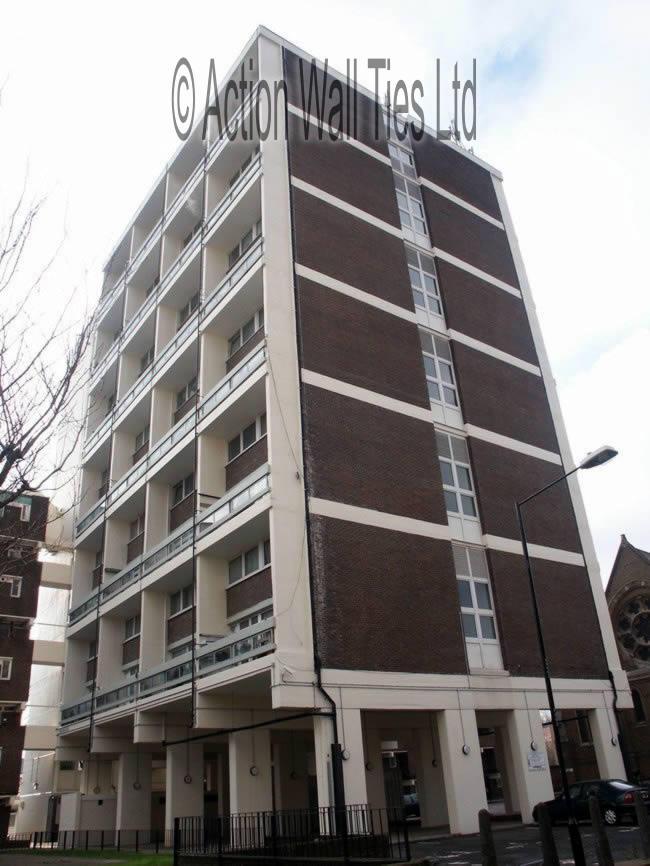
The subject building was a circa 1960/70s 13-storey, high-rise block of maisonettes of concrete frame construction with single and two-storey brickwork veneer to the South and North elevations and two-storey inset balconies of fenestrations and cavity infill walls to the East and West elevations.
The cavity infill walls were constructed of good quality multi-red stock bricks externally (all in stretcher bond) with 70-80mm cavity and lightweight blocks internally.
The infill walls were constructed on the inset concrete floor with a bituminous felt DPC cavity tray on the concrete floor. No raked-out perps or weep holes were noted.
The brickwork was found to be generally in good condition, with some signs of cracking and distress noted to the south elevation. The pointing appeared to be of a good standard and had weathered well, with the exception of the brickwork below the windows to the east and west elevations.
Inspection with an Imp wall tie detector and the use of an endoscope to every brickwork panel revealed that the wall ties were vertical twist ties and were located in “Abbey Anchor” dovetail slots cast into the concrete wall.
The vertical twist ties had a fishtail end built into the brickwork and a dovetail end that engaged into the dovetail slots embedded to the concrete wall. The embedded slots appeared to be galvanised and in good condition, with no corrosion noted.
The ties viewed were in poor condition with varying degrees of corrosion noted.
• Loss of section had occurred on the built-in fishtails.
• Laminated corrosion was present on the upper surface.
• No corrosion was noted on the dovetail end.

The aggressive localised corrosion was deemed to have been significantly exacerbated by bi-metallic action, with the slot becoming cathodic (positive) and the tie becoming anodic (negative), creating a “corrosion hot spot” fuelled by moisture and oxygen within the bed joint. It was also noted that the underside of the portion of tie within the cavity had not corroded, but the upper section covered in mortar had.
The severity of the corrosion noted was significant, and if left to continue without repair it would most likely result in the opening up of the bed joints and cracking of the wall panels and cost much more to repair.
Some horizontal cracking, lifting and opening up of joints were noted at irregular intervals.
Metal ties were located behind the cracks with an electronic wall tie locator. Some corroded wall ties requiring repair were clearly visible.

AWT completed a remedial scheme providing a viable repair through the introduction of a pattern of remedial wall ties and the isolation of the existing ties, followed by re-pointing.
Action Wall Ties (AWT) are specialists in masonry reinforcement and repair, providing cost effective wall tie replacement and repairs and professional solutions to a wide variety of structural problems in Surrey, London and Kent.
Replacing wall ties are a speciality of ours and we have developed cost effective repair techniques, avoiding more costly repairs if left later down the line, so to discuss these with us please contact us on 01227 721 255, or email us.
Our specialist structural repair contractors will be happy to help provide a comprehensive and permanent repair to your structural problems.