Defects: Large Panel System Building
Let us carefully, sympathetically and promptly resolve your masonry, brickwork or wall stabilisation issue
Let us carefully, sympathetically and promptly resolve your masonry, brickwork or wall stabilisation issue
LPS, or Large Panel System building, blocks, once popular, fell out of favour when Ronan Point, a tower block in London’s East End, collapsed in the late 1960s.
New regulations required all LPS blocks over a certain number of stories to be strengthened to minimise the risk of progressive collapse, preventing a repeat of that tragedy which claimed several lives.
However, not all have been completed and some were rushed through, leaving them in a state that falls short of current standards.
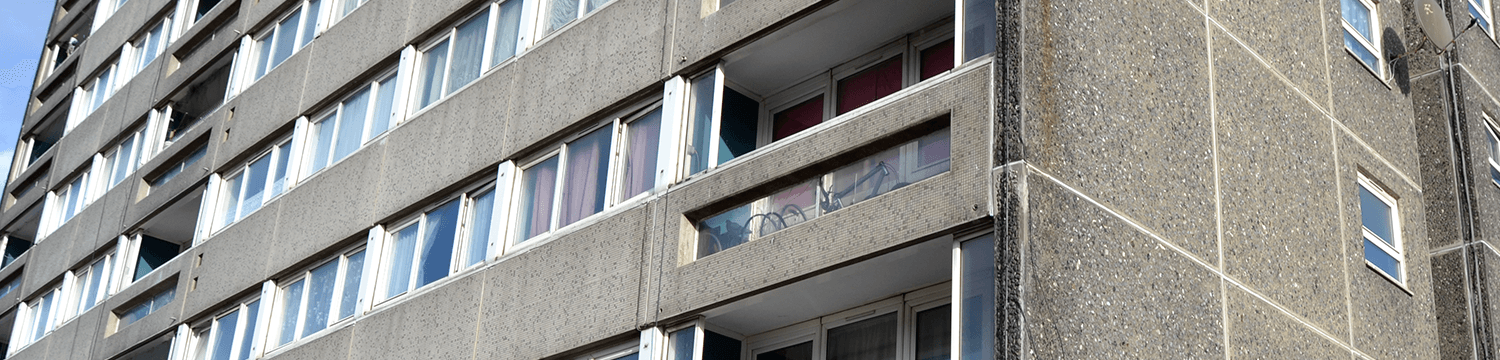
If you maintain an LPS block you may experience defects that affect your wall to floor connections, sandwich panels or precast window mullions. These can be caused by poor workmanship, inadequate ties or metal fatigue. But no matter the cause, the answer is to deal with the problem as quickly as possible to contain the issue.
Working with our clients and structural engineers we have been strengthening LPS blocks for around 20 years fixing the wall panels to floors by installing steel brackets, cross stitching; supplementary panel ties; stainless steel bolts and sockets to mullions.
Every building’s issues are unique and therefore so are the solutions we formulate to tackle them. Our experienced surveyors, senior consultants and on-site workforce ensure that issues are quickly identified and resolved and all remedial work is completed to the highest of standards.
Your LPS block is in good hands with Action Wall Ties, as is highlighted by our confidence in offering a 25-year warranty on any and all work that we carry out for our clients. We are the specialists in repairing large panel system building defects, and we cover London, Kent, Surrey and Sussex with our specialist surveyors and contractors.
To book a time for one of our surveyors to visit your property, call us today on 01227 721255, email us at enquiries@actionwallties.co.uk or use our contact form to get in touch.
To see some examples of our work and read our customer stories CLICK HERE